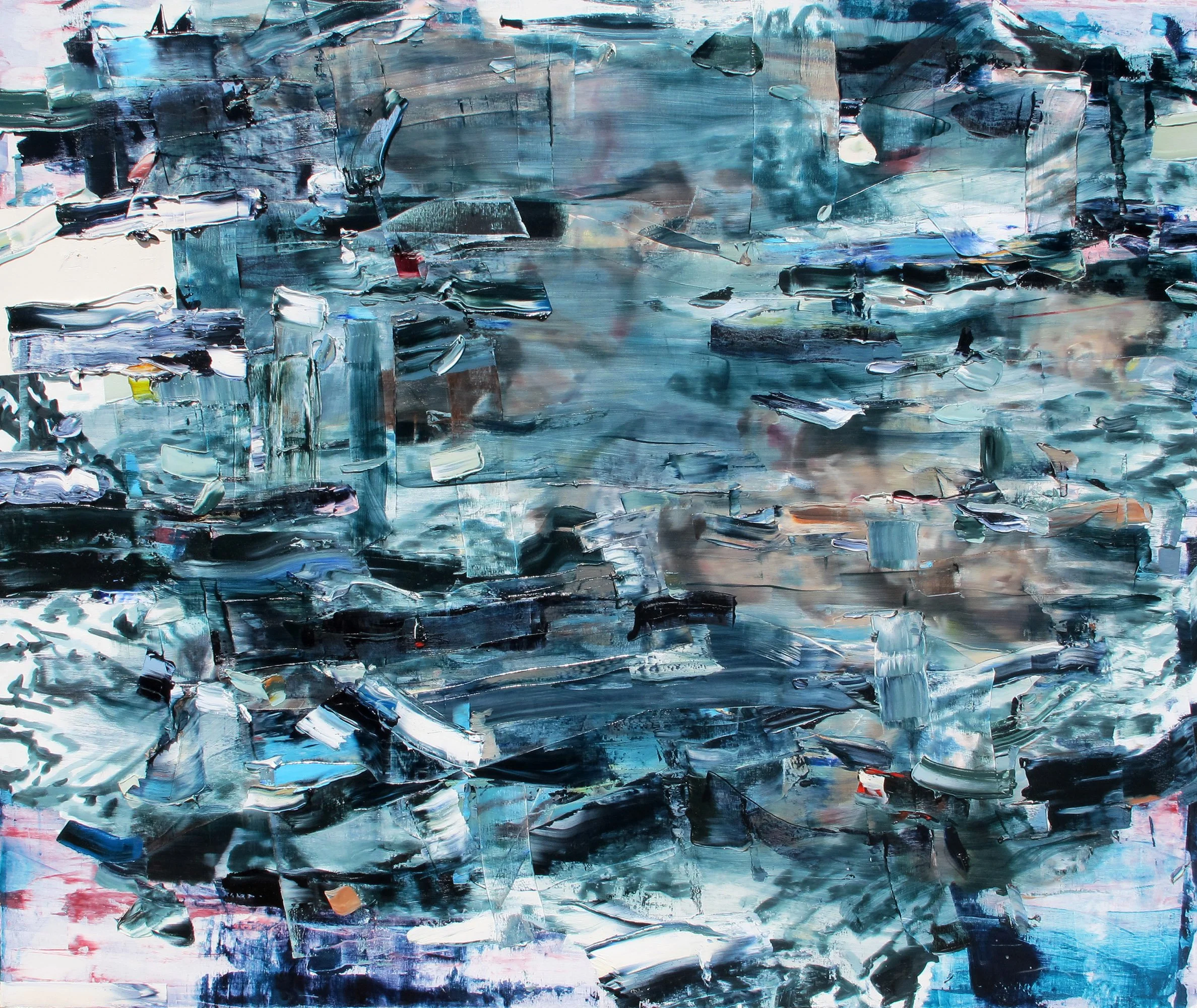
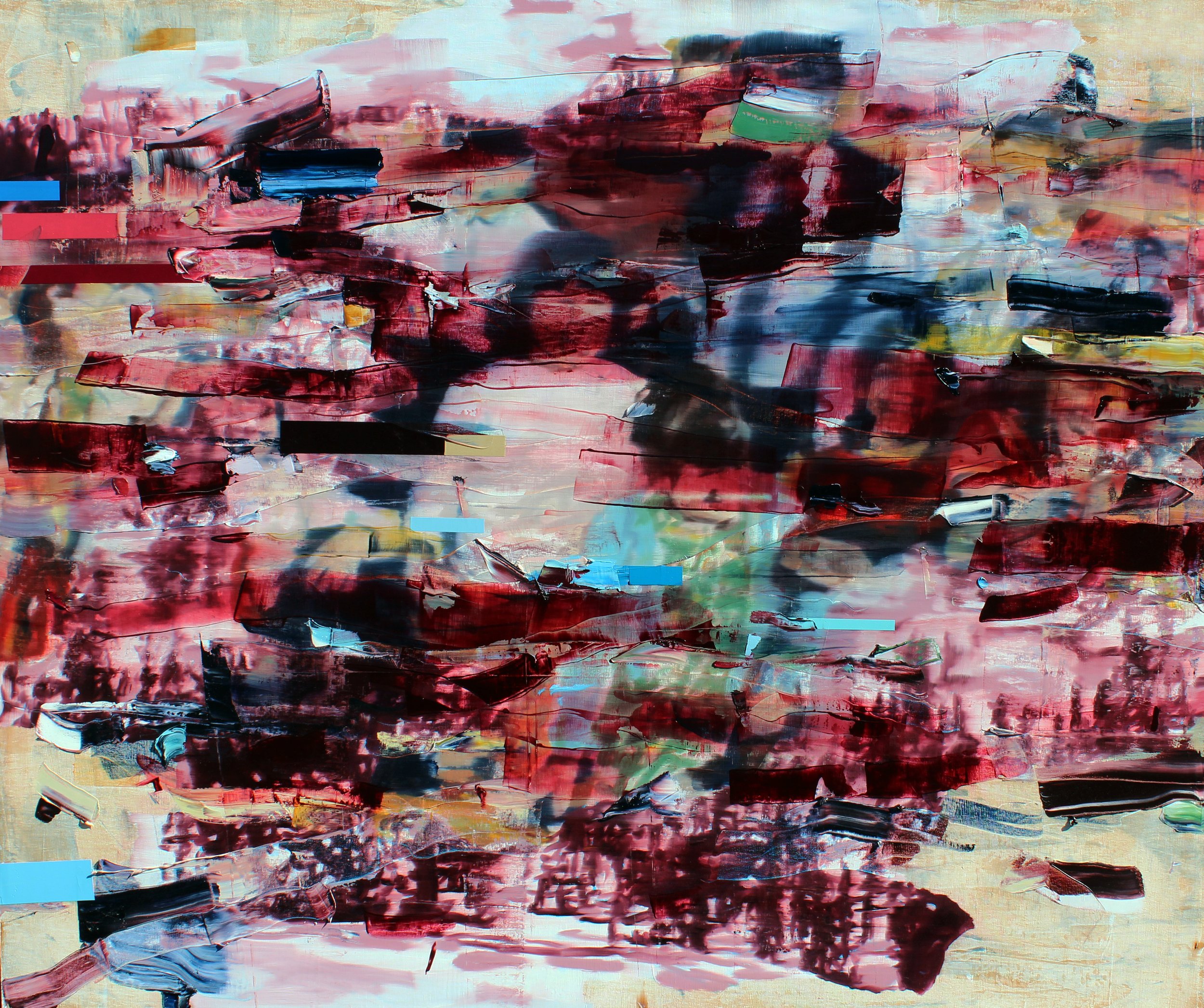
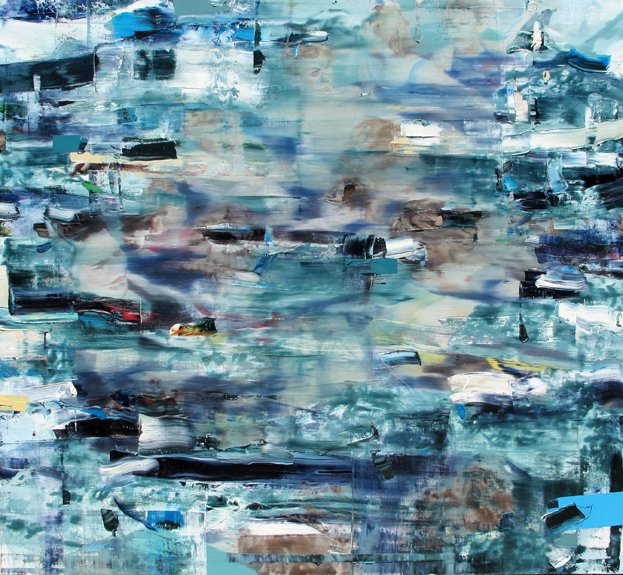
Fall Arts Preview:
‘Ian Kimmerly: As We Wander, We Are Closer’
by Jonathan Curiel, Aug. 13, 2016
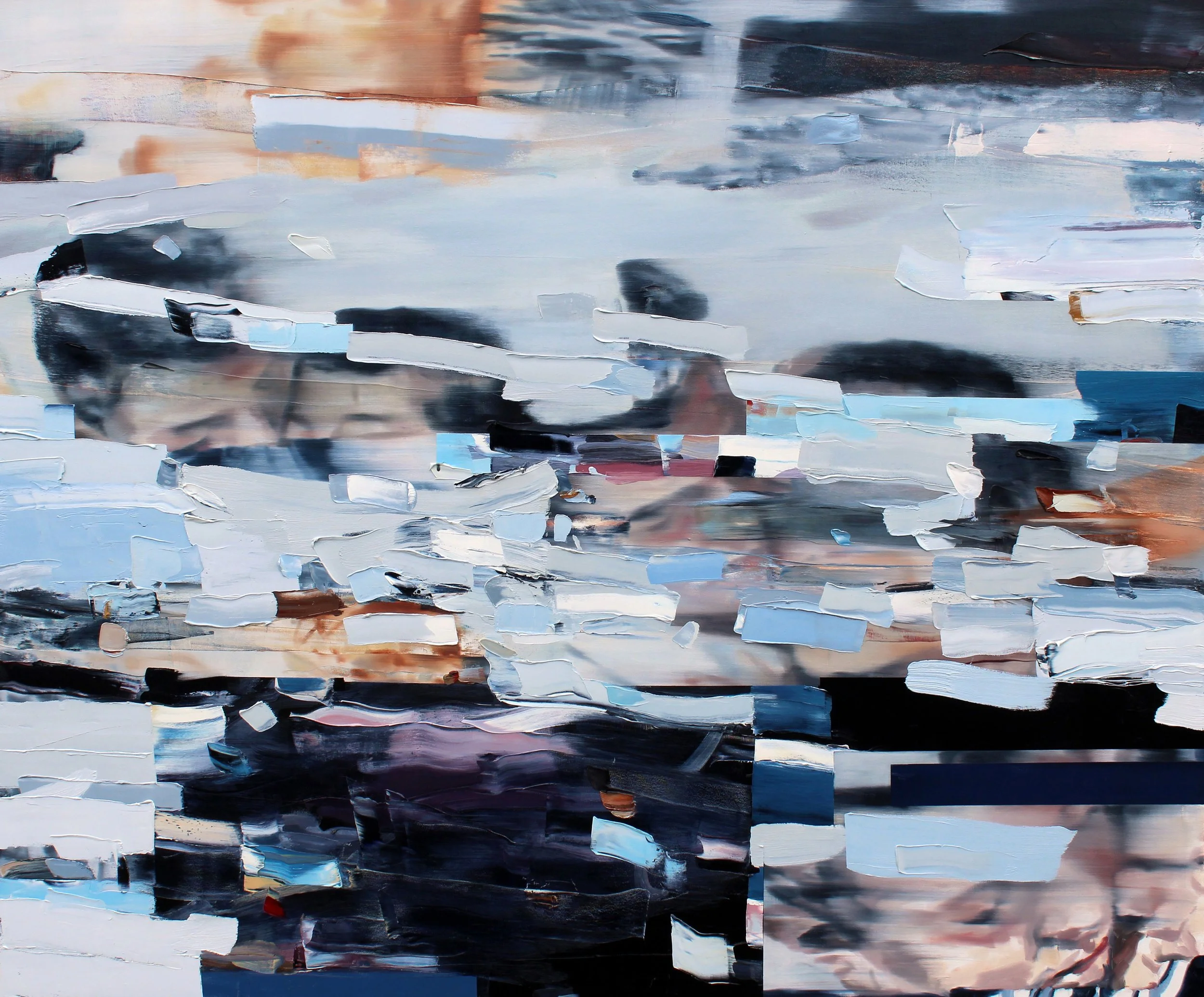
Once every several years, painter Ian Kimmerly exhibits his work at Dolby Chadwick Gallery, and this is that year — a chance to see the work of an artist who creates canvases that distill distinct elements of abstraction and figuration. This time, the digital world and media — social and otherwise — are a subtext of his work. Kimmerly’s work is purposefully (and beautifully) fragmented. As he told SF Weekly the last time he exhibited at Dolby Chadwick, “Big picture, I’m always very interested in the urban experience versus the natural world, and the conflicts there.”

‘Ian Kimmerly Exhibition at Dolby Chadwick Gallery
by Elena Martinique, Dec. 2, 2016
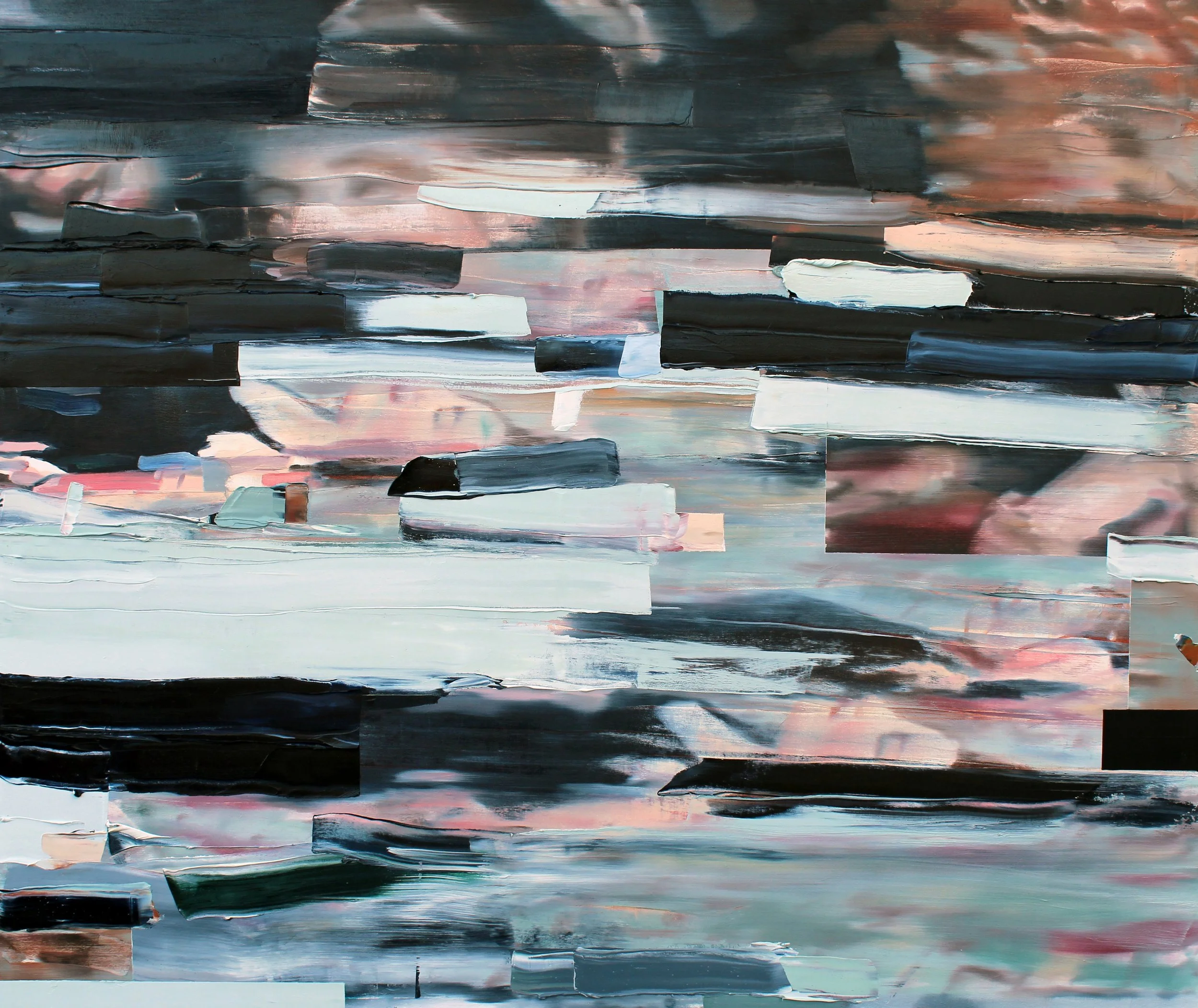
Best known for paintings exploring the notions of memory, personal experience and self in the digital age, Ian Kimmerly aims to reveal the way technology has influenced the world to uncover how people communicate between each other. Ian Kimmerly art show at Dolby Chadwick Gallery titled As We Wander, We Are Closer will feature his new body of work consisted of generously layered paintings that combine figuration and abstraction in a rather provocative way. With the proliferation of smart phones and social media, the technology has made a huge impact on the way we communicate, but also on the nature of interpersonal relationshipswe create. In the world that gives you the ability to be constantly connected, the work of Ian Kimmerly explores the potential of embracing solitude for a while.
Embracing The Solitude
Even though the latest technology has heightened our ability to remain constantly connected, it has also shaped our interpersonal relationships to become largely fleeting and immaterial. This communication remains an exchange at the surface-level, existing in complete contradistinction to true forms of conversation based on an open and sustained dialogue. If we can just try to let ourselves wander and embrace the solitude, this can actually allow us to go deeper and recharge, equipping us with more to give in our future interactions. Combining figurative elements, such as faces rendered photorealistically, and abstract passages and textured daubs of paint, Kimmerly’s paintings loosely chart this type of open engagement with the world.
Constructing Meaning Through Layering
Being neither openly narrative nor readily digestible, the quality of Kimmerly’s paintings resembles the aesthetics of the German painter Gerhard Richter. Interested in the psychoanalytical concept of subject-object differentiation, the artist uses layered constructions that create metrics of form, gesture, texture and color that reveal manifold relationships. This encourages the viewer to take the time to work through the stages of processing in order to construct the meaning within these connections. Featuring an image of a couple with their faces pressed closely to each other at different scales and digital blips in the form of abstract gestures, the painting As We Wander, We Are Closer shows us the potential of digital technologies and prompts us to reconsider the way we want to live our lives. Similarly, the painting Twofold plays upon shifts in gaze, allowing us to view the world not only from a new angle but also through a different lens.
Ian Kimmerly has exhibited both internationally and nationally and has been the recipient of numerous awards and fellowships. The show As We Wander, We Are Closer will be on view at Dolby Chadwick Gallery in San Francisco from December 8th, 2016 until January 28th, 2017. The opening reception will be held on Thursday, December 8th, from 5:30 until 7:30pm.

Top 5 Most Anticipated Shows For Fall/Winter 2016
Aug. 8, 2016
'As We Wander We Are Closer' by Ian Kimmerly
(Opening December 8th, until January 28th, 2017 at the Dolby Chadwick Gallery, Suite 205, 210 Post Street, San Francisco, CA)
It isn't often that you find an Economics degree on the CV of an artist. More rare still, when that economics degree is from the London School of Economics in London, England. Combine that with his degrees in fine arts, including an MFA and you have an artist who already has a unique perspective on things. Kimmerly lives and works in San Francisco, but has shown New York to Arizona and from Mexico to Slovakia. His new collection of work 'As We Wander We Are Closer' continues his use of colour and texture that give his works depth and dimension. He is an artist whose name you will want to remember.

‘Exhibition of New Work by Ian Kimmerly Opens At Dolby Chadwick Gallery’
Dec. 8, 2016
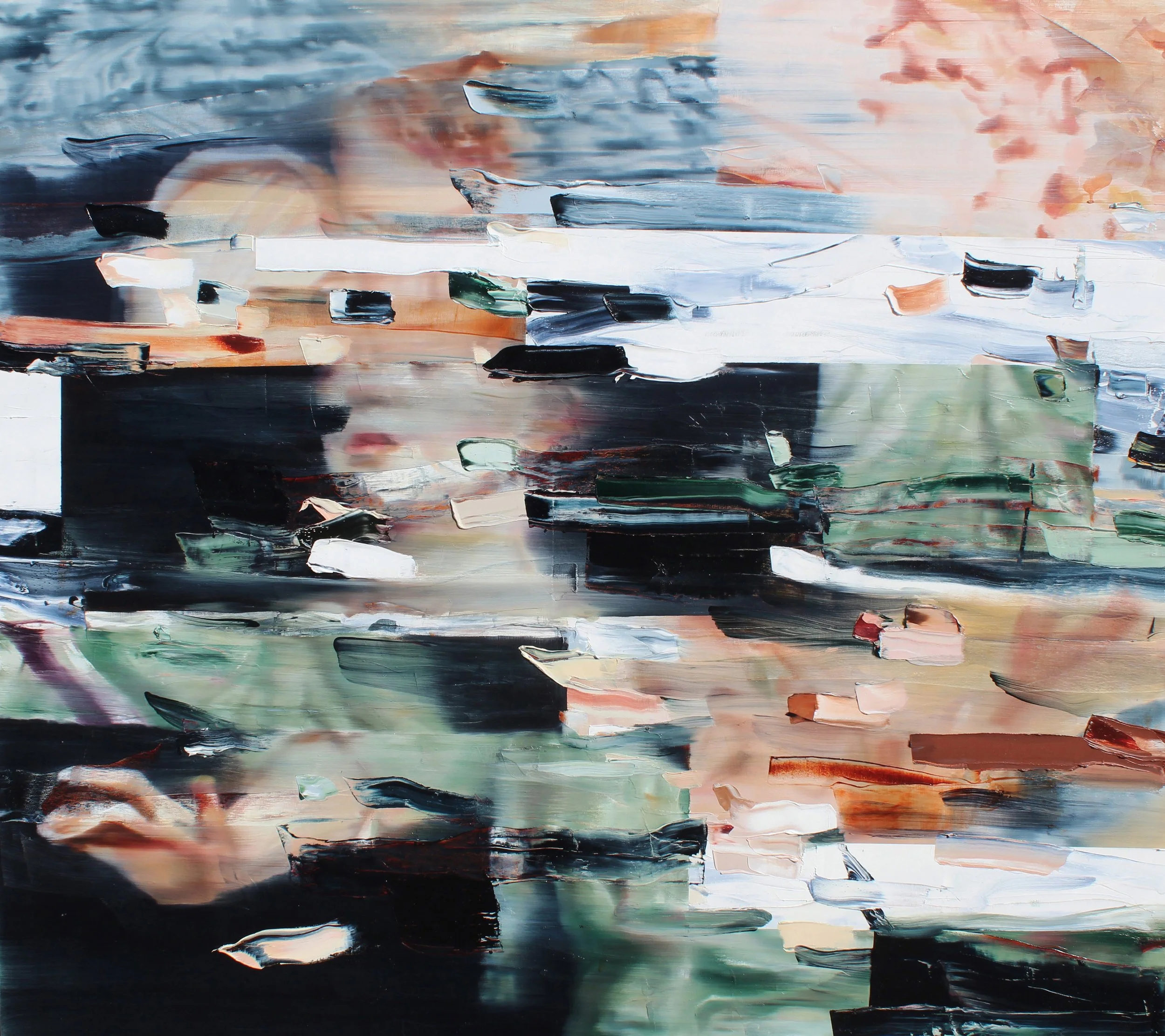
SAN FRANCISCO, CA.- Dolby Chadwick Gallery announces “As We Wander, We Are Closer,” an exhibition of new work by Ian Kimmerly. Kimmerly’s generously layered paintings provocatively combine figuration and abstraction. Figurative elements, especially faces, are rendered photorealistically, scraped away, and then submerged within a milieu of open spaces, abstract passages, and textured daubs of paint.
Kimmerly explains that technology’s impact on our interpersonal relationships has played a role in the creation of this body of work. Smart phones and social media, among other tools, have heightened our ability to remain constantly connected with one another, yet the type of connection facilitated is largely fleeting and immaterial. It exists in contradistinction to true forms of conversation, which are predicated on an open and sustained dialogue that goes beyond surface-level exchange. As the show’s title suggests, however, letting ourselves wander and drift in unstructured ways and embracing solitude can allow us to go deeper and recharge, equipping us with more to give when we finally return to those interactive moments.
The paintings themselves loosely chart this type of open engagement with the world. Their layered constructions create matrices of form, gesture, texture, and color through which to move and discover manifold relationships. Despite the presence of figures—whose blurred, sgraffito quality is reminiscent of Gerard Richter’s aesthetic—the paintings are neither overtly narrative nor readily digestible. Kimmerly notes his interest in the psychoanalytical concept of subject-object differentiation, which is the state immediately before recognition. When you see something for the first time, you apprehend it at an elemental level. Only after evaluating its material profile can you begin to see it a different way, and even start to name it. These initial stages of processing rely on an openness of perspective and are magnified in Kimmerly’s paintings, which encourage the viewer to take time to work through them and find connections that resolve as meaning.
The painting As We Wander, We Are Closer (2016) features an image of a couple with their faces pressed closely to each other. Although the nature of their relationship is unknown, their pose is one of undeniable intimacy. Exploring the effects of seriality, Kimmerly repeats this images three times at different scales, divesting the private moment of any overt preciousness. The changes in scale create a sense of depth and motion, as if the image were flying toward you—an ephemeral bit of data hurtling along the information superhighway. While digital blips in the form of abstract gestures can be seen as obscuring various parts of their faces, it is also possible to read this “noise” as being dispersed as part of a larger process of revelation and formation: for all their weaknesses, digital technologies also harbor great potential. Because their presence in our lives impacts how we view ourselves, our relationships, and our world, they should, in theory, prompt us to reconsider how we want to live our lives. Such shifts in gaze are played upon in Twofold (2016), in which primarily white and peach-toned paints have been dragged horizontally across the eyes of three figures. Several short, dark strokes, however, have been applied on top of the lighter colors, as if transposed eyes, viewing the world not only from a new angle but also through a different lens.
Ian Kimmerly was born in Northport, Michigan, in 1980. He earned his BFA from the University of Michigan in 2002 and his MFA from the University of Arizona in 2005. He has exhibited both internationally and nationally, including most recently at the Richmond Art Center, and has been the recipient of numerous awards and fellowships. This will be his second solo show at the Dolby Chadwick Gallery.
Artist’s Statement: Ian Kimmerly on Why Painting is his ‘Crazy Obsession’
by Jonathan Curiel, Jun 21, 2013
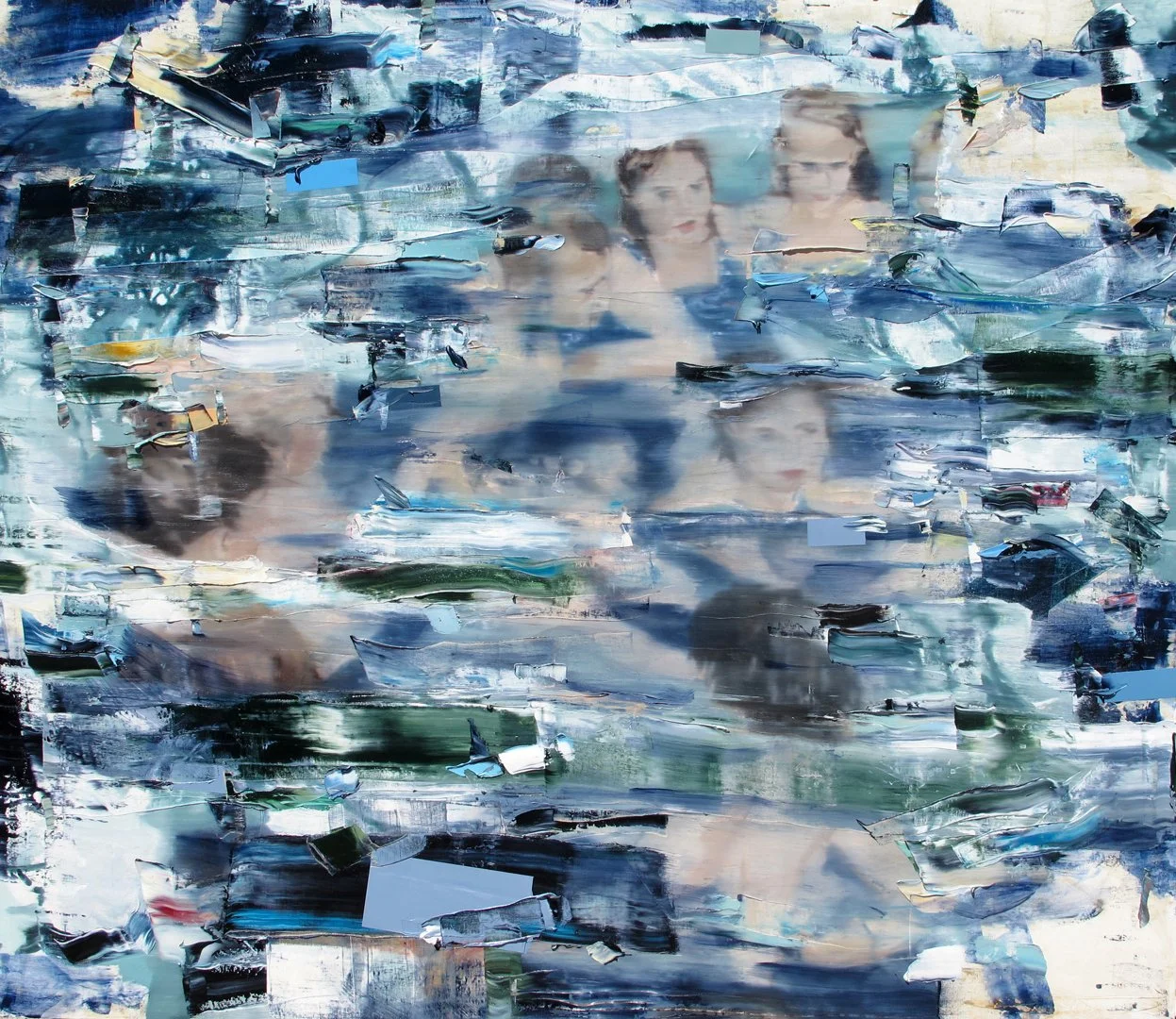
'It was Renoir who said that a work of art “must seize upon you, wrap you up in itself, and carry you away.” Interviews with artists should have a similar effect. With “Artist’s Statement,” our weekly interview series with prominent and upcoming visual artists in San Francisco, SF Weekly speaks to the people behind the art you see in the galleries, in the museums, and in the streets.
Ian Kimmerly is that rare painter, and his hybrid work is on display at Dolby Chadwick Gallery (210 Post Street) through July 6. Kimmerly, 33, who has exhibited around the United States, spoke to SF Weeklyabout finding inspiration in old magazines, living the artist’s life in London, and how his art made the cover of an obscure academic book about property and democracy.
Q: The title of your new exhibit, “Continuous Wave,” evokes all sorts of things, including surfing. Are you a surf-riding painter?
A: I came across the phrase, Continuous Wave, looking through a book of old media technologies and their influence on the cultures of the time. And there was this bit about early radio and some form of radio called continuous wave radio. I liked the sound of that. And I had that in a journal for a couple of years, and when I was putting the show together, I found it again — and it worked with the subject matter, the paintings, and the notion of something that’s connecting all the paintings together. When you’re in the show, there’s this movement — this left-right motion that is happening. I was thinking of waves that way. And there’s also water in some of the paintings. And, to tack on top of that, there’s this continuous flow of information that we have to come to terms with in the digital age that we live in — a continuous wave of Facebook posts, and pictures, and all that. I thought it was perfect enough; it had space to take on the multitude of meanings that the work deal with. Each painting isn’t about one particular idea, per se.
Q: I love your work called Water Logic. I read that it was partly inspired by an old National Geographic magazine. Do you regularly go through old National Geographics for inspiration?
A: I did a series of paintings before this group of work that were all based on specific images that I took from old video from my childhood, and those were so cut and dry — the source of the painting becomes the painting — and so I really wanted to start collecting a bunch of images that I didn’t have a personnel connection to. I found it really freeing. I went to a couple of estate sales and found the French equivalent of National Geographic. I was really interested in the colors of the images, and the advertisements, as well as the images themselves. I was collecting lots of bits of things. I’d have 5 or 6 images in a pile that I thought could go into a painting. So I like a couple of figurative images, but I was basing the painting on a whole different set of colors. So maybe there was an image in that pile that I wanted to base the colors on that wasn’t the figurative pictures I found. You have to step back and cherry-pick a bunch of images.
Stay Awhile My Inner Child, 2013 | 60 x 72 inches | Oil and Acrylic on Canvas
Q: There seem to be people bathing in Water Logic. Is the work a statement about bathing?
A: I had this original image of people in a hot spring. I was really interested in the way that you could see part of the legs and part of the bodies of people were under water, and some were on top of water. So there was this kind of blueish, greenish, purple thing that was happening with the water. A limb, when it’s submerged in water, becomes a little purple. So I was really interested in that idea of semi-submerged figures and kids. And I thought it worked with the idea of how much kids have to navigate right now with all the digital media out there. With the painting of it, I started doing some thin layers of color to get the watery effect, and then it took on the full palette of cool purples and pale colors.
Q: At 33, you’re almost a kid yourself. Do you try to avoid too much digital media?
A: I dip in and out of it. I think it can become a compulsion really quickly. You can go from using it as a tool and using it as something that enriches your life and your connections with people, to semi-addictive. I was just reading this book by Nicholas Carr, The Shallows, about how email can become like a slot machine for people. You get a good email every once in a while, and so you’re always checking your email, and kind of pulling the lever to see if you can get the three cherries to line up. Neurologically, that’s what’s in the background. I think it’s important to pull back and be a little self-critical.
Q: Was there ever a “eureka” moment where you realized you wanted to combine figurative work with abstraction on the same canvas?
A: I don’t think about my paintings in those terms as much as I think about what I want the content to be. Big picture, I’m always very interested in the urban experience vs. the natural world, and the conflicts there. I find that the best way to get at that is to have some kind of figuration. I represent day-to-day experience, and what better way to represent that than with a human figure? And then abstraction — I think about it more as having the experience of the painting. I don’t really think of it as combining abstraction and representational images. I think about the whole thing as one piece — kind of the gestalt effect. It’s important to, up close, enjoy some of the paint and the materials happening, but also to step back and see the movement. I’ve always been interested in the Bay Area expressionist paintings, the figurative paintings, of Elmer Bischoff and Diebenkorn, and the whole figure-drawing relationship. There are figures, but they’re also dealing with space in a really interesting way with blocks of color to define the levels of space, and the material quality of the paint. Is it light from a window, or is it just a blob of paint? Is it acting as an image or is acting as material?
The Living Layer, 2013 | 40 x 48 inches | Oil and Acrylic on Canvas
Q; I haven’t met too many artists who’ve attended the London School of Economics. How did the academic environment there fuel your interest in art?
A: I was there for a summer semester, while I attended the University of Michigan. I had one economics prerequisite to fulfill for my degree, and I also took a theater-criticism class on British theater and contemporary theater, and a film-criticism class on contemporary cinema. I wrote a paper on Trainspotting, and read the screenplay for that. And then I went to the White Cube and the Tate Modern, and really just had a contemporary art smorgasbord in London. For me, that experience was about getting plugged in to contemporary art in a major art center, and getting to meet lots of filmmakers and seeing some plays and really experiencing how all those different disciplines can connect and diverge as well. That’s one of the things I like about living in San Francisco — that you can see some of these things in the flesh. It’s important for everyone — artists especially — to see work like the Mark Bradford show at SFMOMA not too long ago. Looking at that work, and seeing a room full of it, is a completely different experience. There’s lot to learn just from the textile qualities of work like that.
Q: You got your MFA from the University of Arizona. Why did you move to San Francisco?
A: I met my wife in Arizona. It sounds like a country song or something. She was in the creative writing program, and I was in the art department. We wanted to move somewhere together, and we decided San Francisco was a livable city and a good size, and had pretty easy access to nature and hiking. It just seemed like a good fit for us. That was over six years ago. When we got here, we went through the whole experience of going to apartment openings and all that. The good and bad of the Bay Area. It was as advertised.
Q: Your artwork appears on the cover of an obscure academic book called Property-Owning Democracy. How did it get there?
A: Several years ago, I had a friend who knew someone who worked at the publisher of that book, so they always had my website in their list of things to look at for covers and whatever it might be. And the writers of that book saw my work and thought that particular painting would work for their cover because of the combination of urban landscape with the black-and-white houses and the figures drifing above back and forth. The issues of finding a fair economic system and fair housing for people was represented in that image, I guess.
Q: What’s the title of that painting?
A: It’s actually untitled. I just couldn’t think of a title for it. I think it’s the only untitlted work I ever made. (Laughs.) I’m usually more opinionated about what the work is going to be called. I made that in 2006. It’s based more off a collage. The idea is one thing. How you can communicate it is where the fun and difficult work comes in. For me, that painting back in 2006 was more flat and more dedicated to the image and conveying the image. And now I’m much more interested in some of the happy accidents that happen with adding large chunks of paint and scraping them away and really trying to give the material a voice and really work with the specific things that paint can do — how it can function. Because it’s an important question to ask yourself: Why am I working in this medium? What is it about paint on canvas? It’s such a traditional thing. It’s been done for centuries. So for me, I’ve always been attracted to paint because it calls up the history of art, but also because — gosh — there are still so many options and possibilities with it. It’s kind of a monomaniacal pursuit — a crazy obsession.

‘Ian Kimmerly: Continuous Wave’: Learning to engage the world intimately despite a flood of social media
by Kimberly Chun, Jun. 13, 2013
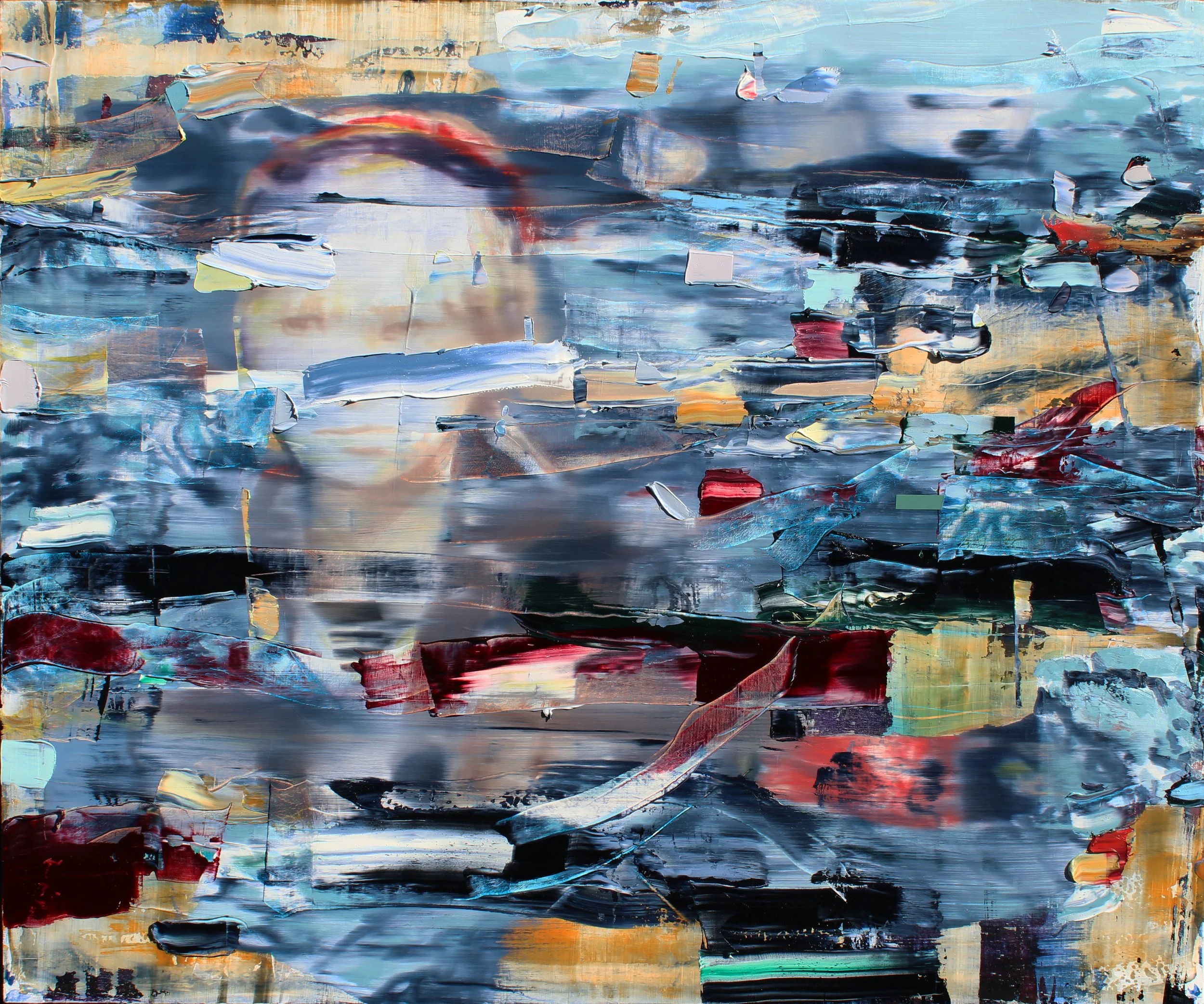
Distortions – whether caused by digitized blips, the bubbles of a hot spring or the fails of memory – have been a productive source of inquiry for S.F. artist Ian Kimmerly, whose solo show, “Continuous Wave,” opens Thursday. His approach, a gestural hybrid of thickly layered abstraction and blurred-out photorealism, emerged from the most mundane of catch-up chores: transferring home videos from VHS and, gasp, Beta to DVD.
“There were all these blips in them, and I started making paintings of them and thinking of them as source material,” he recalls. “That’s how I got into thinking about technology and memory and how those videos altered my experience of how I remember my childhood. I realized I told my family and friends about things that happened only because I saw it on the tapes – I couldn’t tell you what happened before and after.”
Working at his Hunters Point Shipyard studio, Kimmerly sources images from old magazines for his latest series of paintings to look at more universal effects -say, “how it affects us and how we are from day to day.”
Q: What does “Continuous Wave” reference?
A: The title I found reading a book on media studies – continuous wave is an early form of radio, and I thought it alluded to interconnection. The work in the show is from the past couple years, and the premise has been about coming to grips with the tension between the media world and our grounding, or lack thereof, to the natural world and whatever keeps you in touch with who you are. All these media interactions that we have to have – the constant social media and cell phones – in relation to what it is that roots us and connects us and allows us to have more intimate engagements than just fast back and forth.
I think in these paintings I’m talking about, how do we empathize with each other and engage with the world and with each other in meaningful ways?
Water Logic, 2012 | 60 x 68 inches | Oil and Acrylic on Canvas
Q: What was the initial image used for “Water Logic”?
A: I went through a bunch of old National Geographic magazines – I had a bunch of landscapes and a picture of this family in a hot spring, and something about the way the water was going over their bodies, there was already an otherness to it. I thought that would really say something about trying to have a relationship with these people. You can’t quite do it.
Q: You’re originally from the Midwest – what’s it been like to live and paint here?
A: When I’m here, I almost feel conservative, and whenever I leave the Bay Area, I feel like a complete liberal quack! I think there’s an embrace of newness and new ideas that’s really refreshing and good for artists – if you can afford to be here somehow.
The Living Layer, 2013 | 40 x 48 inches | Oil and Acrylic on Canvas
Ian Kimmerly: Continuous Wave: Through July 6. Reception 5:30-7:30 p.m. Thursday (June 13). Hours 10 a.m.-6 p.m. Tuesday-Friday, 11 a.m.-5 p.m. Saturday. Dolby Chadwick Gallery, 210 Post St., Suite 205, S.F. (415) 956-3560. dolbychadwickgallery.com.
Kimberly Chun is a Berkeley writer. E-mail: 96hours@sfchronicle.com Twitter:@kimberlychun

‘Ian Kimmerly @ Dolby Chadwick’
by Rachel Ralph Jun. 19, 2013
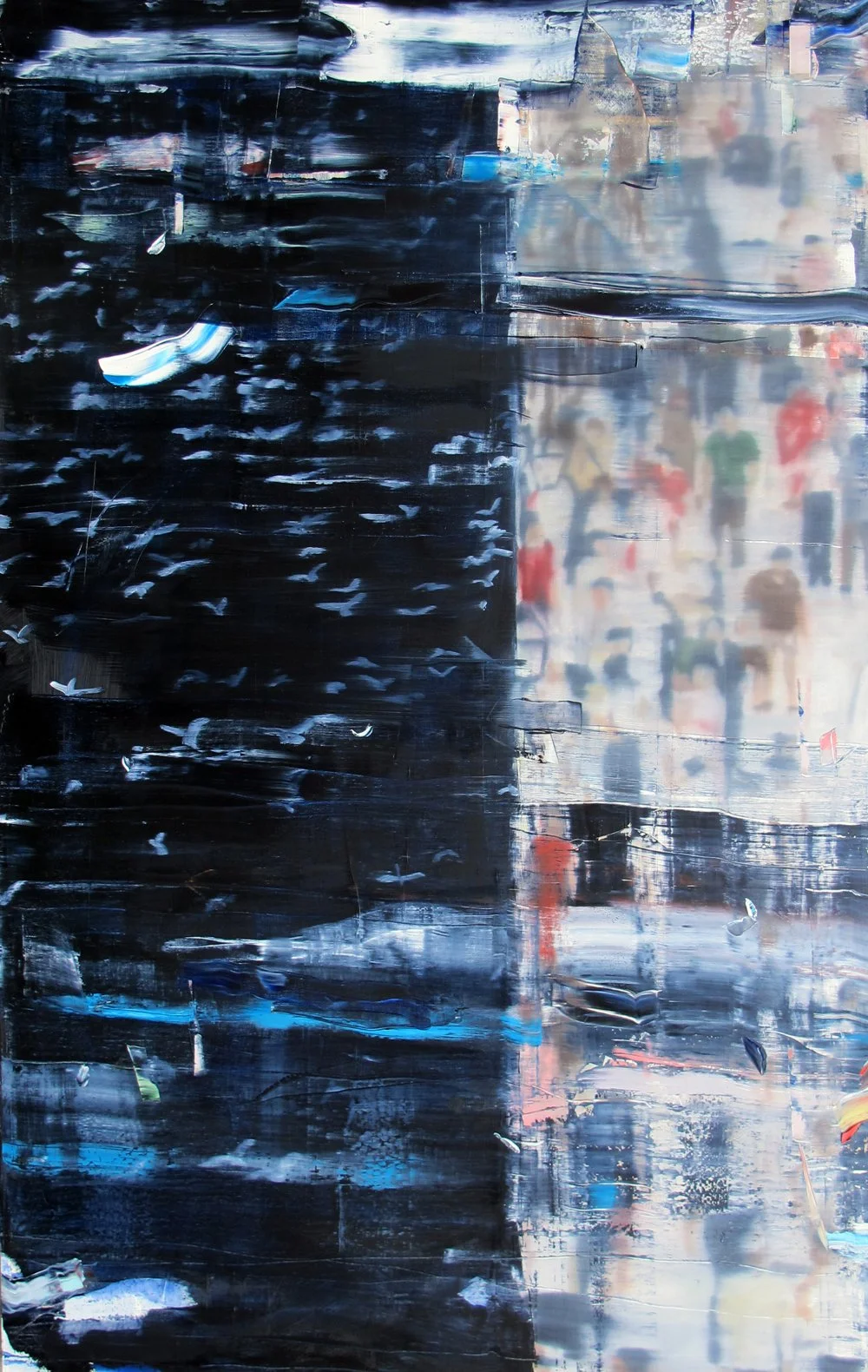
SAN FRANCISCO — Local painter Ian Kimmerly opened his newest show Continuous Wave at Dolby Chadwick on Thursday night, and these are some of the best paintings I’ve seen in a while.
The blurry crowds which occupy the deepest space within the painting look like they were printed, rather than painted, onto the canvas, but upon closer inspection, I found that the entire work was paint. Through abstract figures and brushstrokes, accompanied by very precise swatches of color, his work allows viewers to comprehend its construction while also losing themselves within it. It took everything in me not to touch the paintings, as texture of them is unbearably alluring, but I was very satisfied with just looking as well. Although you’ll probably miss the sophisticated crowd who was present at the opening, this show is definitely worth a visit before it closes on July 6th.
Words & photos: Rachel Ralph – rachel(at)fecalface.com

This Week’s Hottest Events
by Holly McDede, Jun. 3, 2013
Art
“Continuous Wave”
In Ian Kimmerly’s next exhibit “Continuous Wave,” viewers will have the chance to play a more sophisticated and artsy version of Where’s Waldo? while searching for faces, hands, or maybe even a whole human body within Kimmerly’s sea of abstract brush strokes.
When: Thurs. 6/6 – Sat. 7/6
Where: Dolby Chadwick Gallery, 210 Post St.

S.F. Agenda: Design and Arts Events in the Bay Area
by Dara Kerr, Jun. 3, 2013
Ian Kimmerly creates his paintings as if he’s making a sculpture; he adds thick layers paint onto a canvas and then scrapes and moves the colors while the paint is still wet. The end result is a creation of thought-provoking, abstract works of art. San Francisco’s Dolby Chadwick Gallery is hosting a new exhibition of Kimmerly’s work dubbed Continuous Wave. “I like when you can see how something is built,” Kimmerly said in a statement. “There’s a sense of tenuousness about it.” Opens June 6 (reception is 5:30pm to 7:30pm) and runs through June 29, 210 Post Street, Suite 205.

Ian Kimmerly and ‘Continuous Wave’
byJeffrey Carlson, May 31, 2013
Ian Kimmerly creates his paintings as if he’s making a sculpture; he adds thick layers paint onto a canvas and then scrapes and moves the colors while the paint is still wet. The end result is a creation of thought-provoking, abstract works of art. San Francisco’s Dolby Chadwick Gallery is hosting a new exhibition of Kimmerly’s work dubbed Continuous Wave. “I like when you can see how something is built,” Kimmerly said in a statement. “There’s a sense of tenuousness about it.” Opens June 6 (reception is 5:30pm to 7:30pm) and runs through June 29, 210 Post Street, Suite 205.The bold, captivating, and genre-defying paintings of contemporary artist Ian Kimmerly are the subject of a new solo exhibition at San Francisco’s Dolby Chadwick Gallery.
Precious Breathing Space, 2013 | Oil and Acrylic on canvas | 60 x 72 Inches
Ian Kimmerly is an artist who carefully navigates the realms of the physical and the conceptual, the representational and the abstract. His technique is bold and gestural; the marks of discrete, single brushstrokes remain visible throughout his busy canvases. An orchestrated color theme develops in each work, but splashes of bright and unexpected color disrupt any sense of monotony. Perhaps most interestingly, the careful eye will catch glimpses of a face, a hand, or even a full figure amid the maelstrom of slashing abstract strokes.
It is precisely this open space in between the tactile, physical world and the cerebral abstract that Kimmerly’s art explores so meaningfully. In ”Continuous Wave,” an upcoming exhibition of new paintings at San Francisco’s Dolby Chadwick Gallery, visitors will have the opportunity to enter and enjoy Kimmerly’s complex artistic vision.
Stay Awhile My Inner Child, 2013 | Oil and Acrylic on Canvas | 60 x 72 Inches
The artist writes, “Each of these paintings began as a collection of source images: photographs taken by me and also found in magazine images from the 1960s and ’70s. With each painting in this exhibition, I wanted to say something about the complexity and temporal qualities of the human experience.
“All the paintings in ‘Continuous Wave’ started with this idea, with the desire to maintain a connection to the physical. Each painting then goes in different directions as images are added and removed, along with abstract passages and other layers.”
“I find it difficult to navigate today’s seemingly necessary media interactions (cell phones, TV, social media, etc.), while maintaining a solid footing in the present moment. In the wake of so much technological advancement, it’s become important to me (and to my work) to maintain a connection to the natural world’s physical realities, which inform how we engage with our environment and each other.
The Living Layer, 2013 | Oil and Acrylic on Canvas | 40 x 48 Inches
The sustained presence of human figures within largely abstract compositions seems to point toward their special significance. These figures continually draw the eye, but they are distanced from us by the haze and distortion produced in Kimmerly’s dynamic paintings. Speaking to the significance of his figures, the artist explains, “You can argue whether we respond to figures in paintings because of an engrained survival instinct or an inherent desire to empathize and relate to others. I have always been interested in figurative paintings that are able to stir up these existential issues, paintings where the structure of the figure is intact but there is some sort of expressive quality or comment on the human condition.
“I find it is essential to reference the world we experience in order to wonder what may exist beyond it. For this reason, the figures in my paintings are often obscured in some way. They may be reflections in windows or manipulated as they’re painted to convey an emotional distance.”
Sea Change, 2012 | Oil and Acrylic on Canvas | 60 x 66 Inches
With their nearly endless visual interest and real psychological power, one could easily (and happily) be lost in Kimmerly’s paintings.
“Continuous Wave” will open at Dolby Chadwick Gallery on June 6, with an artist’s reception to be held that evening from 5:30-7:30 p.m. The exhibition runs through July 6.
A native of Northport, Michigan, Ian Kimmerly lives and works in San Francisco. He has studied at the London School of Economics, the University of Michigan (B.F.A. 2002), the Academy of Fine Arts and Design in Bratislava, Slovakia, and the University of Arizona (M.F.A. 2005). Kimmerly’s work has been featured in solo and group exhibitions in San Francisco and Tucson, and in group shows in Jonesboro, Arkansas; Dallas; San Antonio; New York; Sebastopol, California; Scottsdale, Arizona; Slovakia; and Mexico.
For more information about the art of Ian Kimmerly, visit www.iankimmerlyart.com